What the “Waffle House Index” Means for Aurora Residents
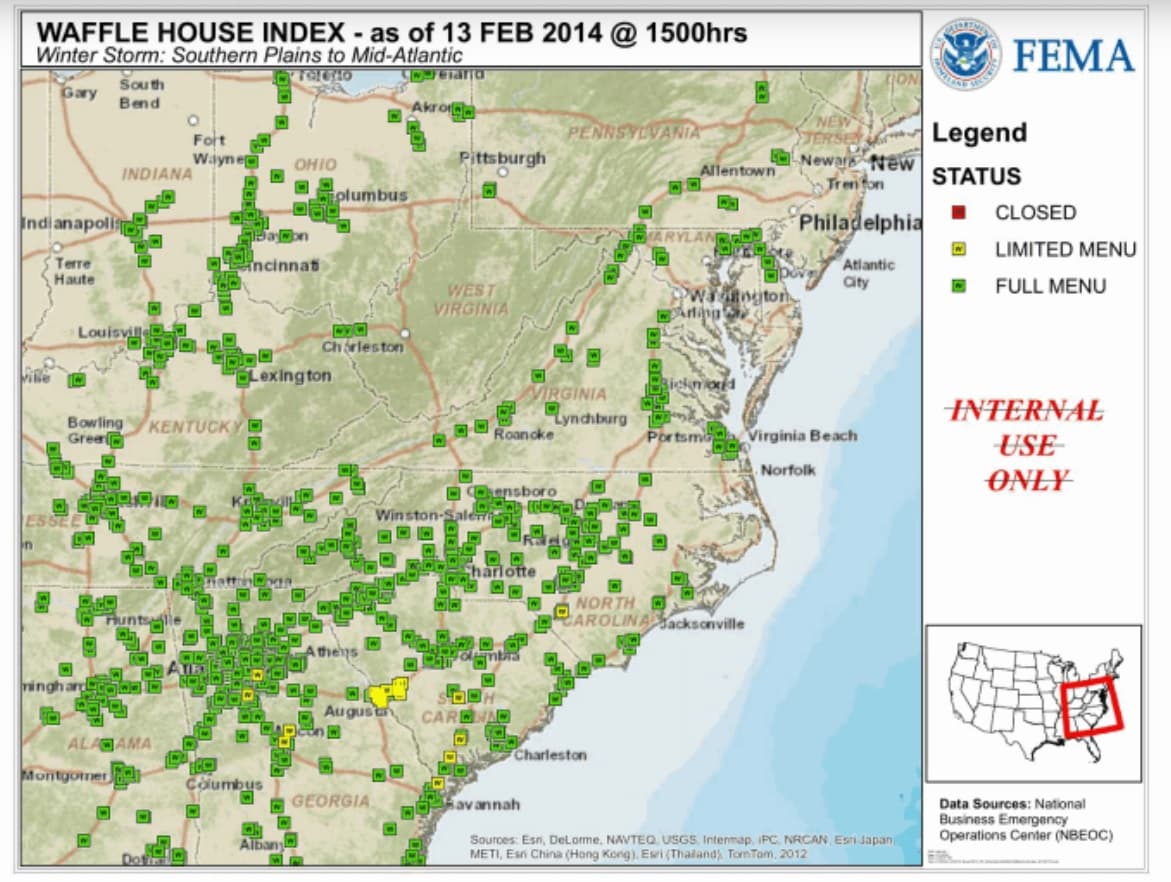
If you’ve ever wondered how emergency managers quickly gauge a storm’s impact, you’ve probably heard of the Waffle House Index. Originating in the South, this informal metric looks at whether local Waffle House restaurants are open, serving a limited menu, or closed entirely. Federal officials and state agencies use the status of these 24‑hour diners as a fast‑track signal of how severe a weather event is and how badly infrastructure—power, water, roads—is holding up.
Here’s why the index matters for us in Aurora:
1. Rapid Assessment – When a thunderstorm or winter blast hits the Front Range, the first thing responders check is whether essential services are still running. If a Waffle House (or any similar 24‑hour eatery) is operating on a reduced menu, it usually means power is out but backup generators are working. A full closure often signals widespread damage, prompting a larger emergency response.
2. Community Preparedness – Knowing the index helps Aurora families decide when to stay home, stock up on supplies, or head to a shelter. It’s a quick, relatable way to understand the seriousness of a storm without wading through technical reports.
3. Local Adaptation – While Colorado doesn’t have a Waffle House on every corner, the principle applies to our own 24‑hour diners, grocery stores, and the Aurora Emergency Operations Center. When these key spots stay open, it’s a good sign that the city’s power grid and roadways are still functional.
So the next time a severe thunderstorm warning pops up, keep an eye on your favorite late‑night spot. If it’s still serving pancakes, chances are the storm’s impact is manageable. If it’s closed, it’s time to follow Aurora’s emergency guidelines, stay informed, and prioritize safety.
Keywords: Waffle House Index, storm severity, Aurora weather, emergency preparedness, Colorado storms, disaster response.